Before you record over a beat, tune an 808, or drop a sample into a project, you need one piece of information: the key. Get it right and everything you add sits in the track. Get it wrong and the hook sounds off, however good the take was.
Here are four ways to find the key of a beat, loop, or sample, and the reasons beats are harder to read than full songs.
1. Check the file name and the listing
Start with the easy win. Producers who sell or share beats usually put the key and tempo in the title, the description, or the file name, something like “F#m 140.” Sample packs label their loops the same way. If the key is written down, trust it for now and confirm it with one of the methods below.
2. Use a key finder
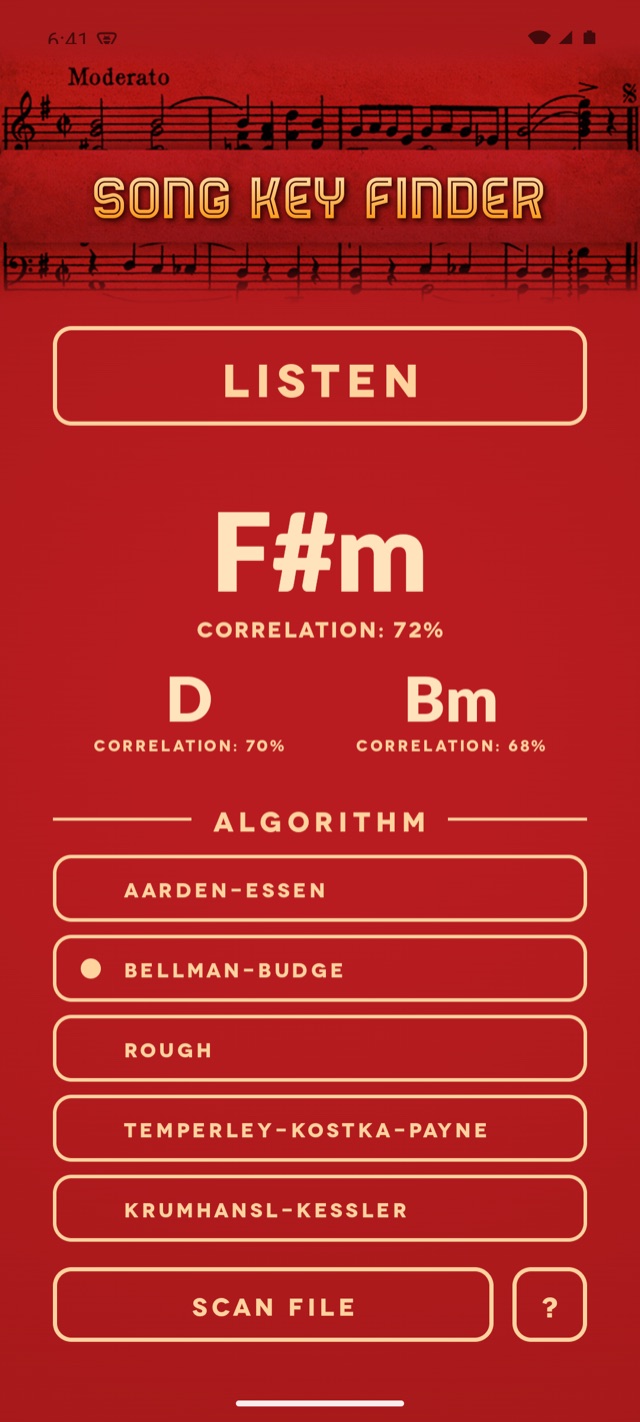
A key finder listens to the audio and compares the notes it hears with every major and minor key. Our app, Trova Song Key Finder, does this on a phone.
- Open the app and press Listen.
- Play the beat out loud near the phone. Studio monitors or a decent speaker work better than laptop speakers.
- Let it run through a full loop of the chords or melody, then read the key. Two runner-up keys are shown below it with a match score for each.
With the Pro upgrade there are two more options. You can scan the audio file directly, without playing it out loud, or let Trova listen while the beat plays in another app on the same phone.


3. Find it by ear with one bass note
This works with any instrument, including a single key on a MIDI keyboard.
- Loop the beat. Four or eight bars is enough.
- Play one low note and hold it. Move up a semitone at a time. Most notes will clash or feel unsettled.
- Listen for the note that sounds like home. One note will sit under the whole loop as if it belongs there. That is the key note.
- Test major against minor. Add the note three semitones above it for minor, or four semitones above for major. Keep the one that fits.
4. Read the 808 or the bass in your DAW
If you have the project or the stems, put a tuner plugin on the bass or 808 track and watch which notes it plays. In most beats the 808 plays the root of each chord, and the note it lands on most often, especially at the start of the loop, is usually the key note. Check it by ear with method 3, because some beats start on a different chord.
Why beats fool key finders
- Drums have no key. Kicks, snares, and hi-hats are loud and mostly unpitched. If you can, listen to an intro or breakdown where the melody plays without them.
- 808s slide. Glides and pitch bends smear the bass note across several pitches.
- Samples sit between keys. A sample that was sped up or slowed down often lands between two notes, slightly sharp of one key and flat of the next. Trova’s Pro upgrade adds better support for audio that is out of tune like this.
- Loops don’t give much evidence. A two-chord loop or a three-note melody fits several keys equally well. This is why a good key finder shows runners-up.
- Major and minor twins. Every minor key shares its notes with a relative major. If a finder says C major and the beat sounds dark, try A minor.
When two methods agree, you have your answer. When they don’t, trust the bass note test.
What to do with the key
- Tune the 808. Its root note should be the key note, or the root of whichever chord is playing.
- Set pitch correction. Pitch-correction plugins ask for a key and a scale. Give them the wrong one and they will pull notes to the wrong places.
- Choose samples that fit. A loop in the same key, or its relative major or minor, will drop straight in. For anything else, the Camelot wheel shows which keys sit close together.
- Write the melody. Once you know the key, our chart of the chords in every key tells you which chords and notes are safe.
- Tell the vocalist. Singers and rappers with melodic hooks need the key before they write.
Questions and answers
How do I find the key of a beat without a piano?
Use a key finder app that listens to the beat, or check whether the producer listed the key in the title or file name. A tuner plugin on the 808 track will also show you the bass notes.
Is the 808 note the key of the beat?
Often, but not always. The 808 usually plays the root of each chord, and the note it returns to most is frequently the key note. Confirm it by ear.
Does the key matter for rapping?
Less than for singing, but it still matters for melodic flows, hooks, ad-libs, and anything that goes through pitch correction.
Why does my key finder give two different answers?
Usually because the two keys share most or all of their notes, as a major key and its relative minor do. Short loops and detuned samples make this more likely. Use the bass note to decide.
Does Trova Song Key Finder also find the tempo?
No. It reports the key only. Most DAWs detect tempo for you, or you can tap it in.
Keep reading
- Camelot wheel chart: all 24 keys
- Chords in every key: a chart for all 24 keys
- Relative major and minor keys
Know the key before you record
Trova Song Key Finder is available for iPhone, iPad, and Android. It is a paid app with no subscription and no ads, and Pro is a separate one-time purchase. Learn more about Trova.